Written by the Starline Team | Last updated: September 15, 2026
For a short Seattle ride with one destination, a flexible schedule, and little to carry, a taxi may be the sensible choice. For a simple point-to-point trip, it can give you exactly the transportation you need without paying for a level of planning or service you may not use.
A reserved town car becomes more appealing when you want more control over the ride: a specific type of vehicle, a fixed arrival time, room for people and belongings, a return already arranged, or a higher level of comfort and personal attention.
Sometimes you simply need transportation. Other times, the vehicle, the chauffeur, and the way the trip is looked after are part of what you are paying for.
The real difference is how much of the ride you choose in advance
Imagine two people heading downtown for dinner. There is no hard arrival time, they are traveling light, and they will decide how to get home later.
A taxi is perfectly reasonable.
Seattle taxis are regulated, their drivers are licensed, and their vehicles are inspected. This is not a comparison between a professional driver and an unprofessional one. A better way to think about this is how much you want to choose before the car arrives and what type of service experience do you want to have.
With a private Seattle town car service, Starline has the pickup, destination, passenger details, and anything that may affect the vehicle choice. The chauffeur reaches out before pickup, and dispatch is available if the plans change.
You are also choosing a different kind of ride. Instead of simply needing enough seats, you can reserve a luxury sedan or SUV with the space, comfort, and service level you want.
For that simple dinner ride, none of this may matter very much. That is precisely why a taxi can be the appropraite choice.
On another evening, those same details may matter quite a lot.
Booking ahead does not mean exactly the same thing everywhere
Seattle taxis can also be requested in advance, so the distinction is not simply “taxi on demand, town car by reservation.”
If your timing is flexible, that may be enough. If you need to arrive before a theater curtain goes up, it is worth knowing exactly what has been confirmed.
Under the current Seattle–King County application-dispatch rule, an app-dispatch taxi trip is considered confirmed when a driver has been assigned. An app accepting a request for a future ride and a driver being assigned to it are not necessarily the same.
With Starline, the reservation is built around the trip ahead of time. The itinerary, passenger information, vehicle class, and type of service are arranged before pickup, and the chauffeur contacts the customer before the ride.
That can matter even more when you are booking for someone else. If the passenger is your parent, a visiting guest, or a client, Starline can include the traveler’s name and mobile number so pickup communication reaches the person actually waiting for the car.
The quality of the ride can be part of the decision
The difference is not only what happens before pickup.
The car itself matters. So does the way you are treated once you are in it.
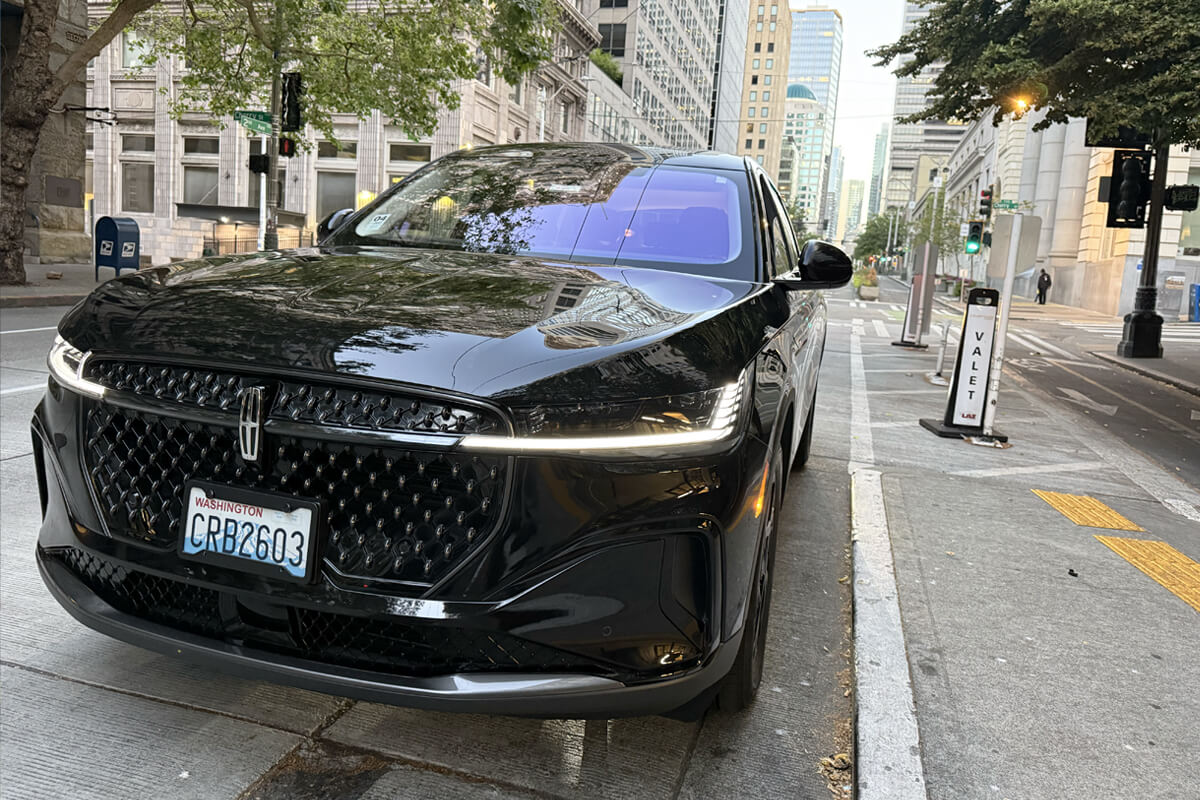
Starline’s fleet includes luxury sedans and SUVs, including Volvo, Cadillac, Lexus, Lincoln, GMC Yukon Denali, and Cadillac Escalade models. The point is not the badge on the grille. It is what the vehicle gives you once the door closes: more room to settle in, a quieter cabin, comfortable seating, and an interior that has been cleaned and prepared for chauffeured service.
Depending on the vehicle, bottled water and charging access are also available.
Then there is the chauffeur.
Good service often appears in small moments: helping with belongings, giving someone time to get comfortably seated, knowing the reservation before the passenger gets in, communicating before pickup, and paying attention to what the passengers need during the ride.
If plans change, the chauffeur also has a dispatch team behind the reservation rather than having to solve the change alone.
Public feedback on Seattle taxis is mixed. Some riders report courteous drivers, timely pickups, and good value. Others describe missed scheduled pickups, older or poorly kept vehicles, fare disagreements, and inconsistent service.
That variability is important because it gets to the heart of the comparison. With a reserved town car, the vehicle condition, service standard, chauffeur attention, and communication are part of what you chose in advance.
If those things do not matter much for this trip, a taxi may still be the right answer.
If they do, the town car begins to justify its higher price before you ever compare the mileage.
Price only makes sense when you compare the same trip
There is no universal price winner.
As of August 2026, the Seattle–King County regional taxi fare rule sets the smart-meter fare at:
- $2.60 for the first one-ninth mile
- $2.70 per mile when traveling faster than 11 mph
- $0.50 per minute when traveling 11 mph or slower
- $0.50 for each passenger over two, excluding passengers under age 12
Seattle taxis may also use authorized alternate fares, including flat, upfront, dynamic, agency-specific, app-based, and vehicle-size fares. For an app-arranged trip, the fare—or the way it will be calculated—must be shown before the customer accepts it.
So a Seattle taxi is not always simply “whatever the meter says.”
Starline pricing depends on the service you are arranging. A direct ride, a vehicle that waits while you are at an appointment or event, and several hours with a chauffeur available are different kinds of bookings.
For a short one-way trip, the taxi may easily cost less.
But once you add a larger or higher-end vehicle, a planned return, waiting time, several stops, or a chauffeur who remains available, you are no longer comparing two versions of the same ride.
The fairest comparison is the same itinerary, the vehicle you actually need, the same passengers, stops, waiting, and return plan.
Then you can decide whether the additional comfort and service are worth the difference.
Passenger count tells only half the vehicle story
Now let’s make that dinner trip a little more complicated.
Two friends are joining you, and one needs to be picked up at another address before the show. Four adults need to ride together, everyone has coats and personal belongings, and you want to arrive with enough time to get seated before the curtain goes up.
“Four passengers” still does not tell you everything you need to know about the vehicle.
A car may have four available seats and still feel crowded once everyone and everything is inside. A sedan may be perfectly comfortable for one group; another group of the same size may prefer the extra room of an SUV.
That is why Starline looks at the passengers and what they are bringing together. It also helps to know whether everyone needs to remain in one vehicle and whether anyone has mobility needs that should be considered.
For larger groups, a Sprinter Van may make more sense.
The point is not to choose the biggest vehicle available. It is to choose one that fits the trip well.
That affects more than cargo space. Bags are not competing with passengers for room. Four adults have space to settle in. Conversation is easier in a quieter cabin. The vehicle feels comfortable for the people inside it, not merely technically large enough to carry them.
Then think about what happens after the show
Our dinner-and-show evening now has four passengers, an extra pickup, a fixed curtain time, and a vehicle that needs to fit the group comfortably.
Eventually, everyone also needs to get home.
You could still use taxis. Arrange the ride downtown, enjoy the evening, then arrange another when the show ends. For many nights out, that works perfectly well.
A town car gives you more options if you would rather settle the return in advance.
You might reserve one point-to-point ride downtown and another for later. You might reserve a round-trip with wait and keep the vehicle during the outing. Or, if the evening includes dinner, a show, drinks afterward, and several moves around the city, reserving the chauffeur by the hour may make more sense.
Hourly service is not automatically the better choice. If the vehicle would spend most of the night sitting outside while you are in the theater, two separate rides may be more practical.
But if the schedule is loose and the group plans to move several times, there is real convenience in walking out and having the same car and chauffeur available rather than arranging transportation again at every stop.
This is where a good recommendation depends on the whole evening: how long you will be out, how predictable the timing is, how many times you will move, and whether keeping the same vehicle nearby actually makes the night easier.
It also brings the customer-service difference into sharper focus.
You can treat each ride as a separate transaction. Or you can arrange the transportation as part of the evening, with one company keeping track of the plan and, depending on the booking, the same chauffeur looking after the group along the way.
Catherine B. described both the planning and the vehicle quality in her Starline review:
“Online booking is easy; they confirm everything via text/email so one less thing to worry about when traveling. Their fleet has a wide range of vehicles to choose from that are current, beautiful & well maintained.” –Catherine B., Google Review
Taxi or town car? Use this 60-second check
| Your trip | Taxi usually makes sense | Reserved town car usually makes sense |
|---|---|---|
| Short, one-way, flexible ride | Yes | Usually unnecessary unless the quality of the ride matters |
| Need a car soon | Often | Better when the ride has already been reserved |
| Hard arrival time | Can work; check scheduling and driver assignment | Better fit when timing is built into the reservation |
| Specific vehicle or more belongings | Ask what vehicle is available | Better fit when you want the vehicle selected in advance |
| Comfort and vehicle quality matter | May be sufficient | Better fit when the vehicle and service standard matter |
| Booking for a parent, guest, or client | Can work with clear arrangements | Better fit when passenger communication and personal attention matter |
| Several stops, waiting, or a return | Arrange each ride as needed | Better fit when the pieces should be planned together |
| Lowest likely cost for a simple trip | Often the better starting point | Worth comparing when you value the additional service |
Before you decide, ask yourself:
- Is the pickup or arrival time fixed or flexible?
- How many people are traveling, and what are they bringing?
- Does everyone need to ride together?
- Is the person booking also the person riding?
- Are there stops, waiting time, or a return to arrange?
- How much do the vehicle, comfort, and level of service matter on this trip?
If you need a simple ride across Seattle and do not care much about the vehicle or what happens beyond that one trip, a taxi may be all you need.
If you want to choose the vehicle, arrange the timing and return beforehand, and have the ride itself feel more comfortable and personally attended to, a town car may be worth the additional cost.
Get a quote for the trip you actually want
If your plans involve a fixed schedule, several passengers, a specific vehicle, stops, a return, or a particular level of comfort and chauffeur service, get a personalized quote.
Send Starline the date and time, pickup and drop-off locations, required arrival time, passenger count, what everyone is bringing, planned stops, and return details.
With that information, Starline can recommend the vehicle and type of service that make the most sense for your trip.